
Chatham County Records at a Glance
Georgia begins with a right to inspect agency records unless a statute, court order, or specific exemption closes them. That broad rule does not make every detail public. Chatham County deeds, tax rolls, open court dockets, business filings, and many custody records have official access routes. Birth certificates, sealed cases, adoption files, juvenile matters, protected voter data, and driver information do not function as open name indexes. The practical question is both what exists and which custodian controls it.
| Record Set | Custodian | Online Index | Access |
|---|---|---|---|
| Deeds, liens, plats | Superior Court Clerk, Real Estate Division | GSCCCA Real Estate Search | Index, public computers, mail, eCertification |
| Court cases | Clerk for the court that filed the case | re:SearchGA and local court routes | Open dockets; sealed and protected files excluded |
| Property and tax roll | Board of Assessors and Tax Commissioner | qPublic, SAGIS, tax search | Free web search and office requests |
| Birth and death certificates | Chatham Vital Records or Georgia DPH | No unrestricted modern name index | Eligibility, identification, and fee required |
| Marriage and probate | Chatham Probate Court | No verified full modern marriage index | Record Room, mail, and appointment routes |
| Jail and state imprisonment | Sheriff or Georgia DOC | Separate county and state lookups | Free public profiles, subject to safety limits |
A public index is not always the record itself. An index may identify parties, dates, and a book, page, or case number, while the image or certified copy has a separate access route and fee. Redaction also matters. Social Security numbers, financial account numbers, full birth dates, protected voter addresses, and other identifiers may be removed even when the rest of a document is released.
Chatham Land Records, Web to Counter
The Chatham County Clerk of Superior Court serves as the recording officer for deeds, liens, plats, realty UCC filings, trade names, and partnerships. The clerk describes holdings from the early 1700s forward, but does not promise one uninterrupted online name index back to a stated year. The GSCCCA Real Estate Search is the online route. When its coverage, account terms, or paid search modes get in the way, public computers in the Savannah record room are available weekdays from 8 a.m. to 5 p.m.
| Search route | Fields or modes | What it locates |
|---|---|---|
| Real estate | Grantor, grantee, book/page | Recorded deeds and real-estate instruments |
| Subdivision | Subdivision, unit, block, lot | Participating-county parcel instruments |
| PT-61 | Name, document; premium address/map | Real-estate transfer declarations |
| Liens, plats, UCC | Name, book/page, file number, secured party | Related recorded filings |
Free deed access does not mean every search mode is free. GSCCCA treats some instrument-type and PT-61 address or map searches as premium products. The fallback is concrete: visit Room 304 at 133 Montgomery Street, use the Eisenhower Drive satellite, mail the Real Estate Division, or obtain a certified electronic copy through eCertification. The clerk can provide records, but does not conduct a title search or prepare a deed.
Note: Grantor means the person transferring an interest; grantee means the person receiving it.
Chatham Property Records Need Context
The Board of Assessors links a GIS-enhanced property search, while SAGIS supplies map layers. Search modes include Property ID, street address, and owner name. A result may show the owner association, parcel identifier, situs address, assessment, value history, exemptions, and legal description. A situs address is the physical parcel location; a mailing address is where tax notices go. Neither proves that the named owner lives on the land.
Tax records add another time issue. The Tax Commissioner explains that the tax file remains in the January 1 owner’s name after a midyear sale, even though the new owner remains tied to the parcel. Treat the appraisal roll as public evidence, not legal title. Confirm a present ownership claim against the latest deed, then use SAGIS to compare the parcel and map boundaries.
Record trail. Address to assessor record to parcel ID to SAGIS map to deed is the sound order for checking ownership facts.
Chatham Court Records Vary by Court
Chatham court records do not share one complete free county index. The Superior Court Clerk links citizens to re:SearchGA, and the Georgia Courts E-Access directory routes users to available systems. Superior, State, Magistrate, Probate, Juvenile, Recorder’s, and federal courts remain separate custodians. Open dockets may show parties and proceedings, but adoption, juvenile, sealed, and protected family details stay out of general access.
For Superior Court copies, registration may be required, and the clerk says approved users can view a document face and print for 50 cents. State Court and Magistrate Court publish different copy and certification schedules. Recorder’s Court has no verified comprehensive public party-name index, so an identifiable record may require a call or city open-record request. Federal cases in the Southern District of Georgia use PACER and its own account and fee rules.
- Docket
- The dated list of filings and events in a court case.
- Certified copy
- A copy authenticated by the custodian for official use.
- Custodian
- The agency or clerk legally responsible for a record.
- Exemption
- A law-based reason to withhold all or part of an otherwise public file.
Chatham Vital Records Have Gates
Modern vital certificates are not unrestricted people indexes. Georgia DPH and local vital-record offices hold births and deaths from January 1919 forward. Under O.C.G.A. § 31-10-26, birth copies go only to eligible applicants with a direct and tangible interest. Death access also depends on the requester and whether cause of death appears. Chatham Probate Court handles local marriage licenses and copies, while divorce decrees remain with the Superior Court Clerk.
The first certified birth or death copy costs $25, with same-record copies ordered together at $5 each. DPH requires prepayment and does not accept personal checks. A search that finds no record yields a not-on-file letter rather than a refund. State marriage searches cost $10, but state coverage is limited, so Chatham Probate Court is the proper route outside those periods.
The official Georgia vital-record request page lays out the application methods, eligibility, identification, and fees.
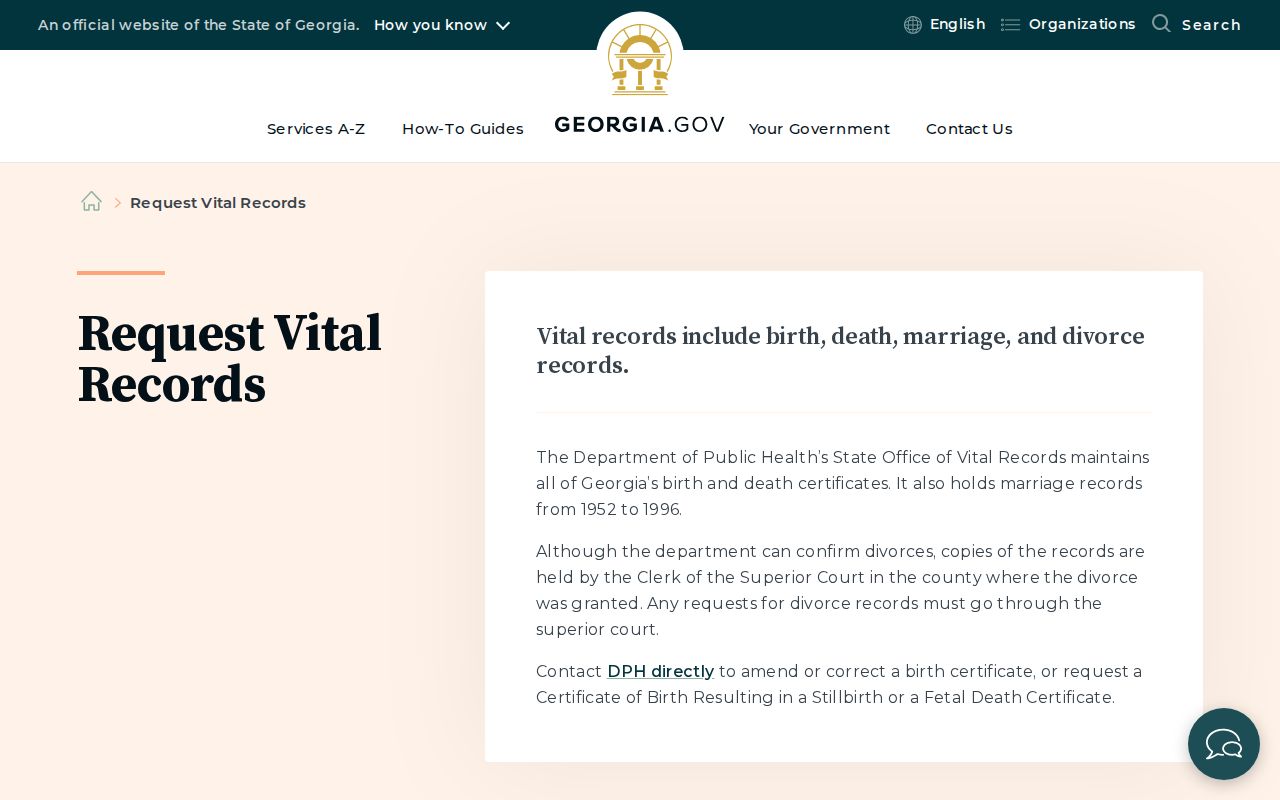
The application route reinforces the key distinction: a certificate request is an eligibility-based service, not a public surname search.
Chatham Custody Records Split Three Ways
Current local jail custody, state imprisonment, and sex-offender registration are separate record sets. The Chatham County Sheriff maintains inmate information for county custody. The Georgia Department of Corrections publishes a free state offender query, while the Georgia Bureau of Investigation manages the statewide sex-offender registry. A no-match in one system says nothing about the other two.
The Georgia corrections offender search provides the state-prison route used for Chatham County public records research.
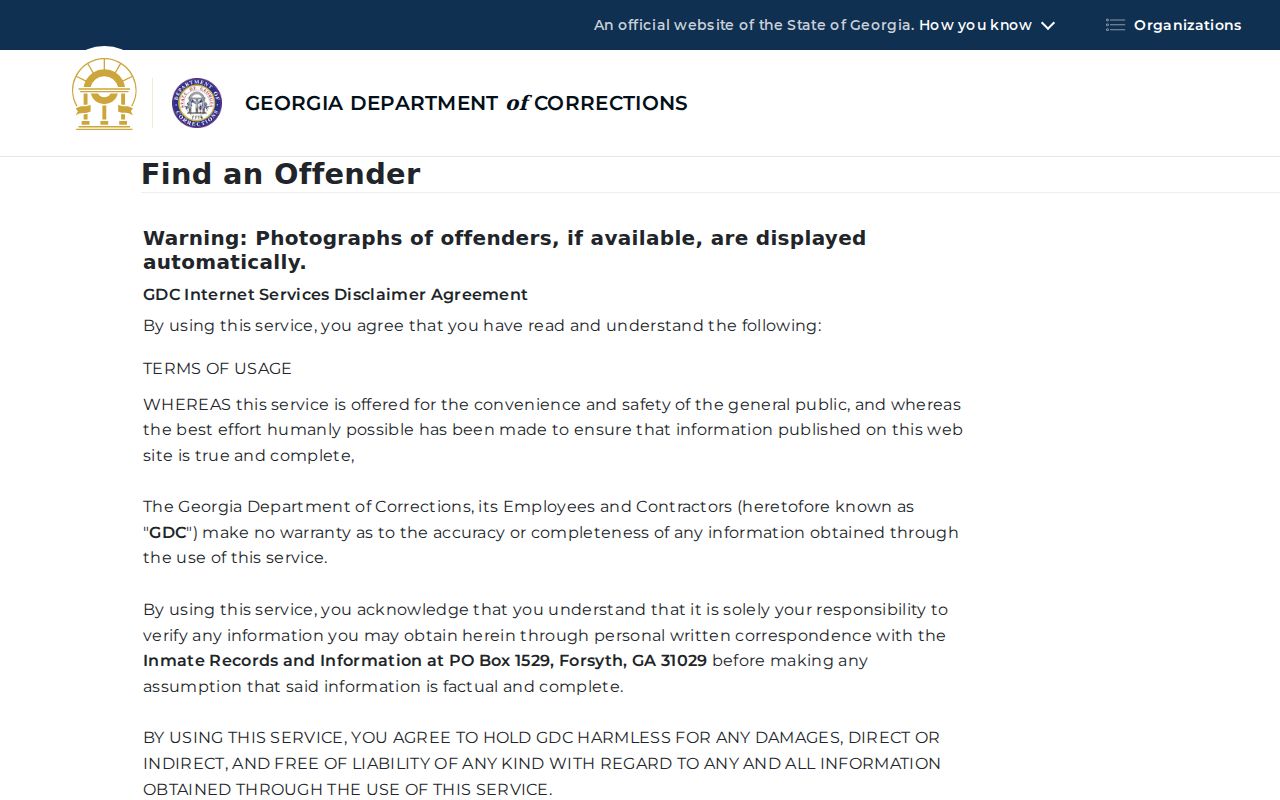
Its distinct form helps prevent a common records error: confusing county jail custody with a Georgia DOC sentence or location.
Savannah Records Reach Beyond Portals
Savannah adds a deep municipal layer to Chatham County records. The Clerk of Council is the city’s oldest office, and city government records reach to 1787. Municipal Archives finding aids describe council papers, cemetery records, tax material, court files, and other person-rich series. Selected birth, marriage, death, burial, court, and tax collections are digitized, but the archive is not one full-text database.
Researchers can review the Municipal Archives collection catalog before requesting an appointment or remote help.
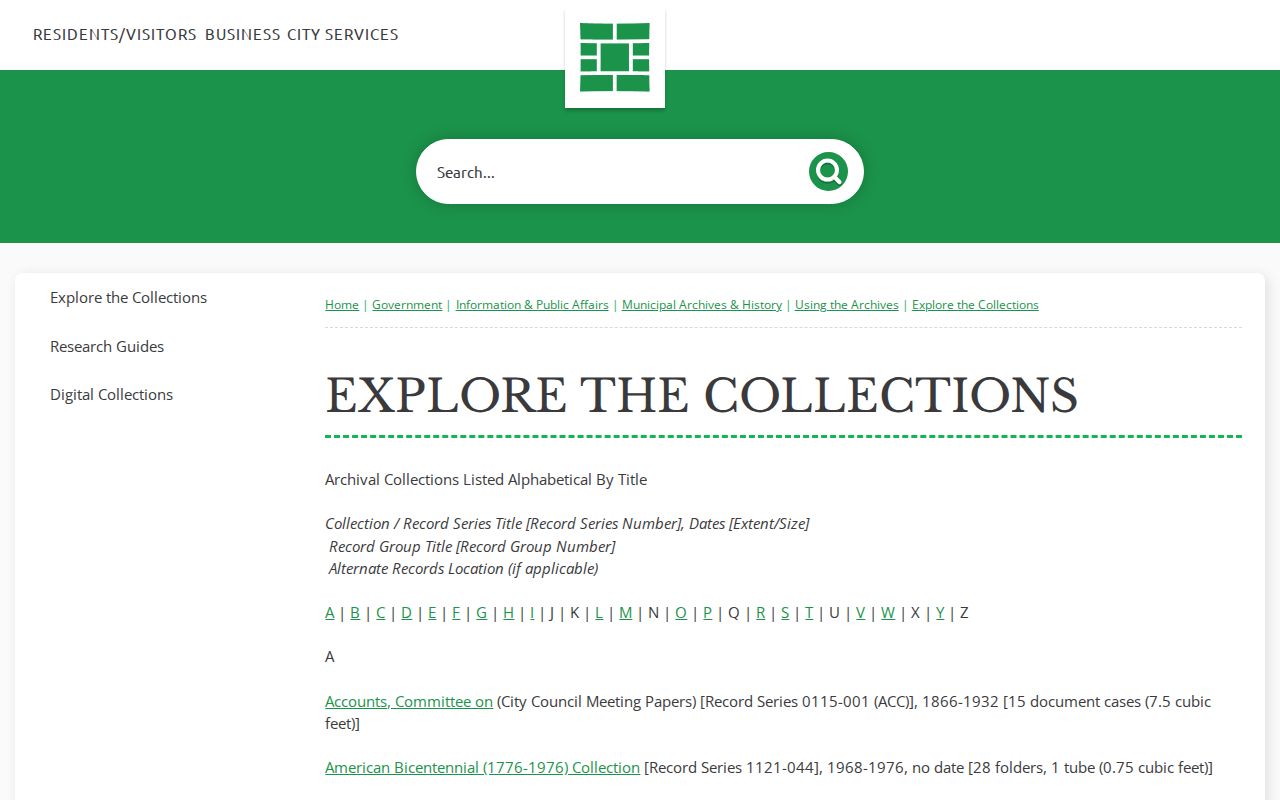
The catalog’s record-series titles and date ranges make a precise request possible when a modern county portal does not reach the needed era.
Chatham Public Records Custodians
The right office depends on who created the file. The Superior Court Clerk controls land instruments and Superior Court cases. The assessor controls appraisal files, and Probate Court keeps estates, wills, guardianships, and marriage documents. Sending a broad request to county administration can delay a court record that belongs with an independent clerk.
Real Estate Recording Division
133 Montgomery Street, Room 304, Savannah, GA
912-434-8971
Board of Assessors
222 W. Oglethorpe Avenue, Suite 113, Savannah, GA
912-652-7271
Probate Record Room
133 Montgomery Street, Room 509, Savannah, GA
912-652-7264, option 1
Chatham Record Copies and Fees
Copy cost depends on the record and the form requested. Under the Georgia Open Records Act, ordinary paper copies generally cost no more than 10 cents per letter or legal page unless another law sets a special fee. Search, retrieval, and redaction time may be charged at the rate of the lowest-paid qualified worker, with the first 15 minutes free. An agency should estimate costs above $25 and may require prepayment in the situations allowed by law.
Probate has its own schedule. Plain copies cost $1 per page. A certified copy costs $10 for processing and the first page, then $1 for each added page; an exemplified copy costs $15 plus $1 for each added page. Staff research is $10. Mail requests require a money order, not cash or a personal check. Court, land, and vital certifications likewise follow their special schedules, so specify whether a plain image will do.
Request Chatham County Public Records
The Georgia Open Records Act, O.C.G.A. §§ 50-18-70 through 50-18-77, lets any person request an existing, non-exempt agency record. The agency must produce it within three business days when practical. If production takes longer, it must respond within that period with a description, timetable, and cost estimate. The law does not force staff to create a new report, answer research questions, or build a compilation that does not exist.
- Identify the office and record series. Include a case, parcel, book/page, or file number when known.
- Check the official index or public terminal first. Note the exact document and date range needed.
- Submit a narrow request through the custodian’s portal, email, mail, or counter route. Ask for native electronic format when available.
- Request advance notice above a chosen cost cap. Decide whether inspection, a plain copy, or a certified copy fits the need.
- If material is withheld, ask for the precise legal citation and all segregable, non-exempt portions. The Attorney General offers open-government mediation.
Lawful use. Open access never permits stalking, surveillance meant to intimidate, threats, or harassing contact. Georgia law can punish that conduct even when a source record was public.
Chatham County now takes general county requests through JustFOIA. Choose “New Request,” then “County Open Records Request,” and route the request to the correct department.
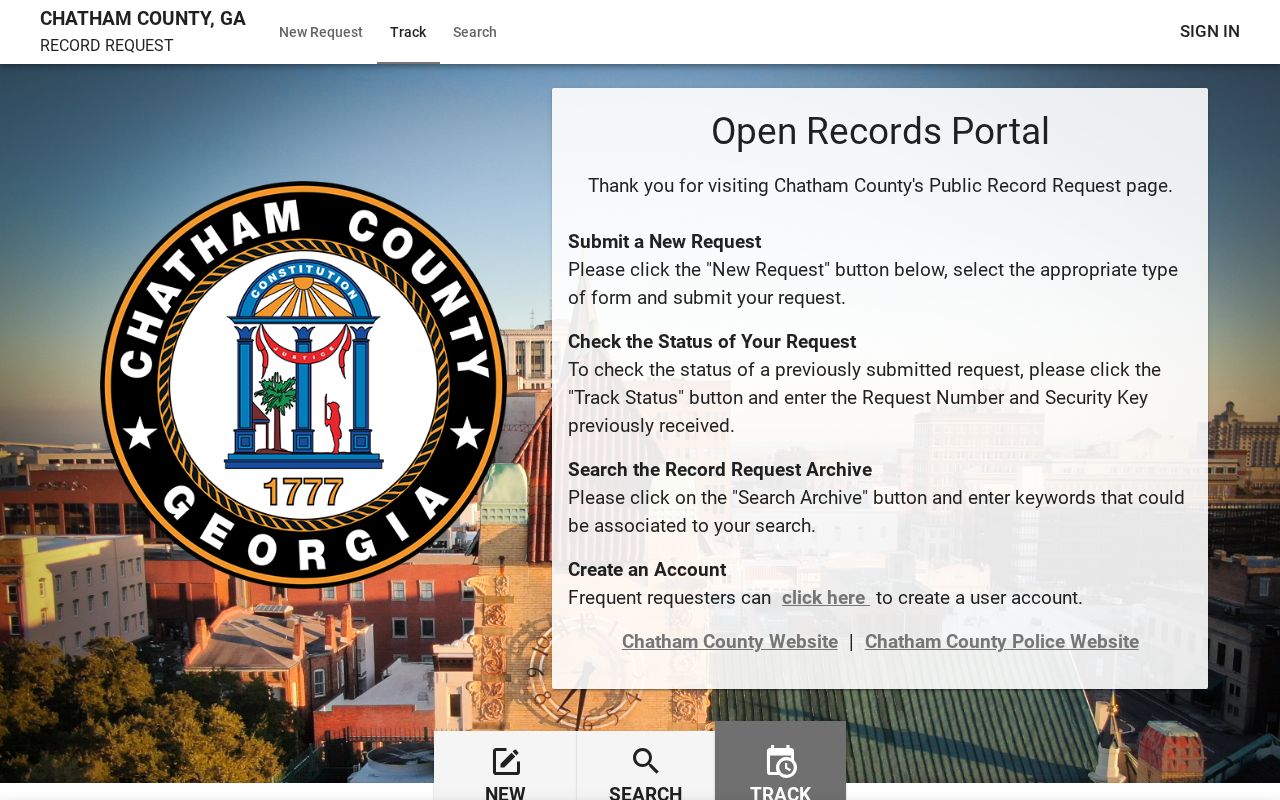
The portal is free to submit, though lawful retrieval, redaction, and copy charges may follow. Savannah uses a separate city route for council, police, fire, and municipal department records, so do not send city files through the county portal.
A delayed or costly response can often be improved without starting over. Ask the custodian to identify the exemption used for each withheld part and to release any portion that can be separated from protected material. If an export is too broad, narrow the dates, department, record type, or fields while preserving the part needed. The Georgia Attorney General's open-government program publishes guidance and may offer mediation, while enforcement can proceed in Superior Court. Keep the original written request, the agency's three-business-day response, its estimate, and each scope change together. That record shows whether the dispute concerns a legal exemption, the time needed to retrieve files, or the form of an existing database export.