
Find People Across Chatham Records
Choose a Chatham County search from the fact already in hand. A street address points to the Board of Assessors and SAGIS. A party name and rough date point to the court that heard the case. A former Savannah address may call for a city directory before any modern parcel tool will help. Family researchers can join probate files, obituaries, cemetery entries, and vital-record channels. Each source answers a narrow question, so a shared name alone should never be treated as proof that two entries belong to one person.
Phone and email data are less common in public records. Current government and school staff directories publish work contacts for people who serve those institutions, while older directories may show a household head, spouse, occupation, and home address. For a broad Chatham County people search, move from the broadest official index to the office record that can confirm the date, role, parcel, or case.
| Search source | Best use | Main limit |
|---|---|---|
| Official Chatham or Georgia record | Confirm a filed event, role, parcel, license, or custody fact | Split among custodians; some details restricted |
| Commercial people-finder category | Generate a possible lead from compiled data | May be stale, merged, incomplete, or paywalled |
| Savannah historical collection | Trace an old address, household, burial, or city role | Coverage varies by year and collection |
- Write down the full name, date range, and any known Savannah or Chatham County address.
- Use the property roll for an address or owner, or the correct court index for a legal event.
- Compare middle names, party roles, mailing addresses, parcel IDs, and dates before joining results.
- Move to deeds, probate, archives, or cemetery records when the first source supplies a new fact.
- Ask the custodian for an existing record when the web index ends or omits the needed detail.
Use records lawfully. Public access does not permit stalking, threats, harassment, or harmful contact. Confirm identity before acting on a result.
Chatham County People Records Offices
Chatham County has no separate recorder of deeds. The Clerk of Superior Court records real-estate instruments and also keeps Superior Court files, though land and court searches use different systems. The Board of Assessors connects owners to parcels and values. Savannah's Clerk of Council handles municipal acts and city open-record requests. Detailed access rules, exemptions, and copy routes belong with the Chatham County public records system.
Superior Court Real Estate Division
133 Montgomery Street, Room 304
Savannah, GA 31401
912-434-8971
Chatham Superior Court Clerk
400 W. Oglethorpe Avenue, Suite 178
Savannah, GA 31401
912-434-8920
Savannah Clerk of Council
City Hall, 2 E. Bay Street
Savannah, GA 31401
912-651-6441
Trace Chatham Names Through Deeds
The GSCCCA Real Estate Search indexes deeds, liens, plats, and other recorded instruments for Chatham County. Search a grantor, the person giving an interest, or a grantee, the person receiving it. Book and page references identify the recorded document. The clerk describes holdings from the early 1700s to the present, but does not promise one uninterrupted web coverage date. When an index or image is absent, public computers in the Montgomery Street record room provide the key fallback on weekdays.
GSCCCA separates name and book/page routes from some premium search modes. Address and map searches in the PT-61 system, along with certain instrument-type tools, may not be free. A no-cost name result therefore does not mean every related image or address route is free. Mail requests, the Eisenhower Drive satellite, the Garden City Records Center, and 24-hour eCertification supply other paths.
| GSCCCA route | Search input | Useful result |
|---|---|---|
| Real Estate | Grantor or grantee name; book and page | Recorded instrument reference |
| Plat | Name; plat book and page | Recorded map reference |
| Lien | Name; lien book and page | Lien index entry |
| UCC | Debtor, secured party, or file number | Realty financing index |
| PT-61 premium tools | Address, map, or document criteria | Transfer-tax search detail |
The official Chatham deed name-search screen shows how the statewide index begins a grantor or grantee trail.
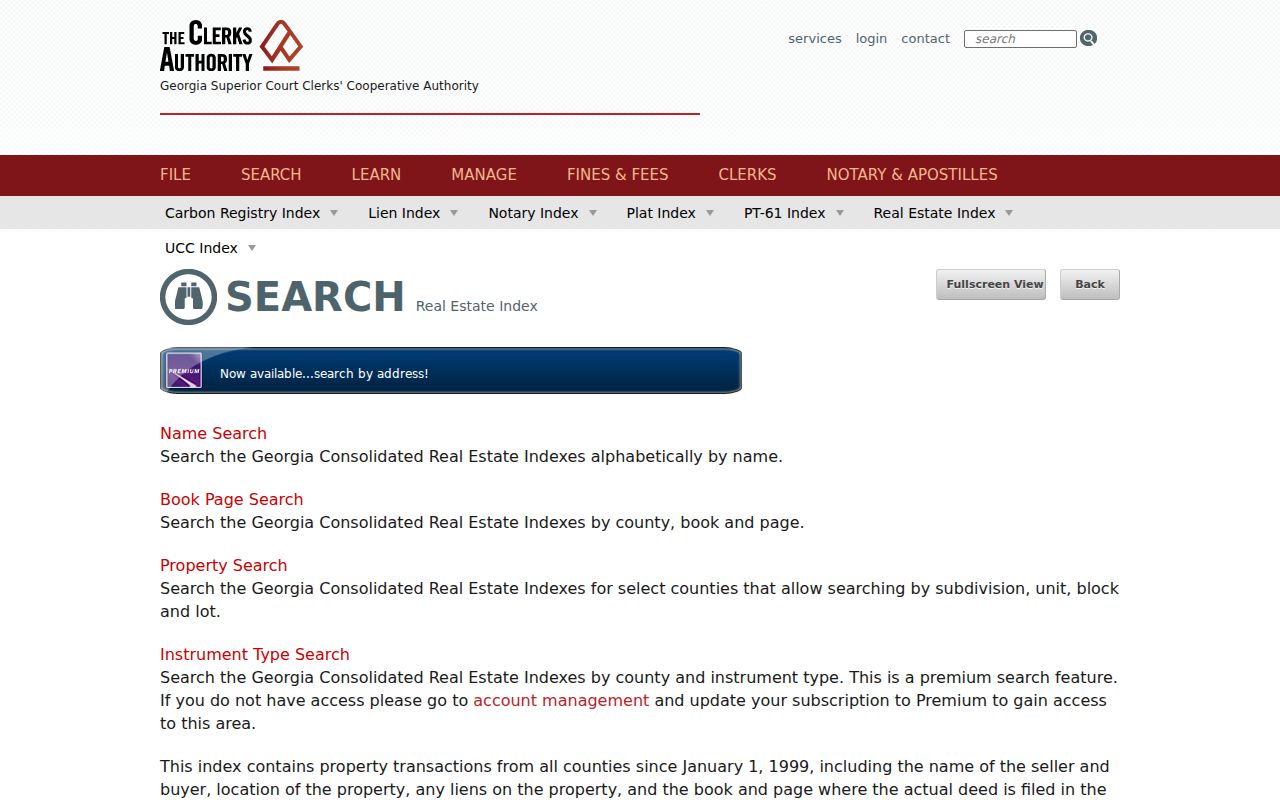
Carry the returned book and page into the document view or clerk request, then compare the legal description with the parcel record.
- Grantor
- The party transferring a recorded interest.
- Grantee
- The party receiving that interest.
- Index
- A finding tool that points to a record; it is not the certified record itself.
- Situs address
- The physical parcel location, which may differ from the owner's mailing address.
Turn Chatham Parcels Into Names
The Board of Assessors' GIS-enhanced search accepts a Property ID, address, or owner name. Preserve the parcel ID, situs address, mailing address, and tax year. They answer different questions. A mailing address is where notices go; it does not prove that the owner lives on the parcel. Chatham tax files also remain in the January 1 owner's name after a midyear sale, so the recorded deed should settle a current-ownership question.
Move the parcel ID into the SAGIS map to check boundaries and local map layers, then use the deed index for the transfer chain. For a non-owner occupant, a Savannah street directory may work better than a tax roll. This flow prevents one common error: treating an owner, a taxpayer, and a resident as the same role without proof.
Record trail: address → assessor owner and parcel ID → SAGIS geography → deed grantee → prior grantor.
Note: Chatham assessment values and exemptions can change, while the portal's Value History tab preserves useful context for an older search.
Search Chatham County Court Names
Chatham County court records are divided by court and case type. The clerk links residents to re:SearchGA for citizen court access, while Georgia Courts keeps an e-access directory for local systems. Registration may be required, and the clerk states that approved users can view a document face and print it for a fee. A docket is the dated list of events in a case, not proof that every allegation is true.
Use party role, filing date, attorney, case number, and disposition to separate namesakes. Superior, State, Magistrate, Probate, Recorder's, Juvenile, and federal courts do not share one complete name index. Sealed matters, adoption and juvenile files, and protected personal data are excluded. The creating court's clerk is the fallback for an identifiable open file.
| Court | Covers | Name Search | Access |
|---|---|---|---|
| Superior Court | Civil, domestic, criminal | re:SearchGA | Portal, counter, or mail |
| State and Magistrate | State-law cases and claims | Local court access | Portal or creating clerk |
| Probate Court | Estates, wills, guardianships | Georgia Probate Records | Record room or mail |
| Recorder's Court | City court matters | No verified full name index | Call or records request |
| Southern District of Georgia | Federal cases | PACER | Account and current fees |
Read Chatham Court Search Results
The re:SearchGA citizen portal is the clerk-linked starting point for Chatham County case and document searches. Its live fields and historic coverage were not verified during research, so do not assume every court or every old file appears there. Search the known name, narrow with dates and roles, then ask the relevant clerk about a missing case.
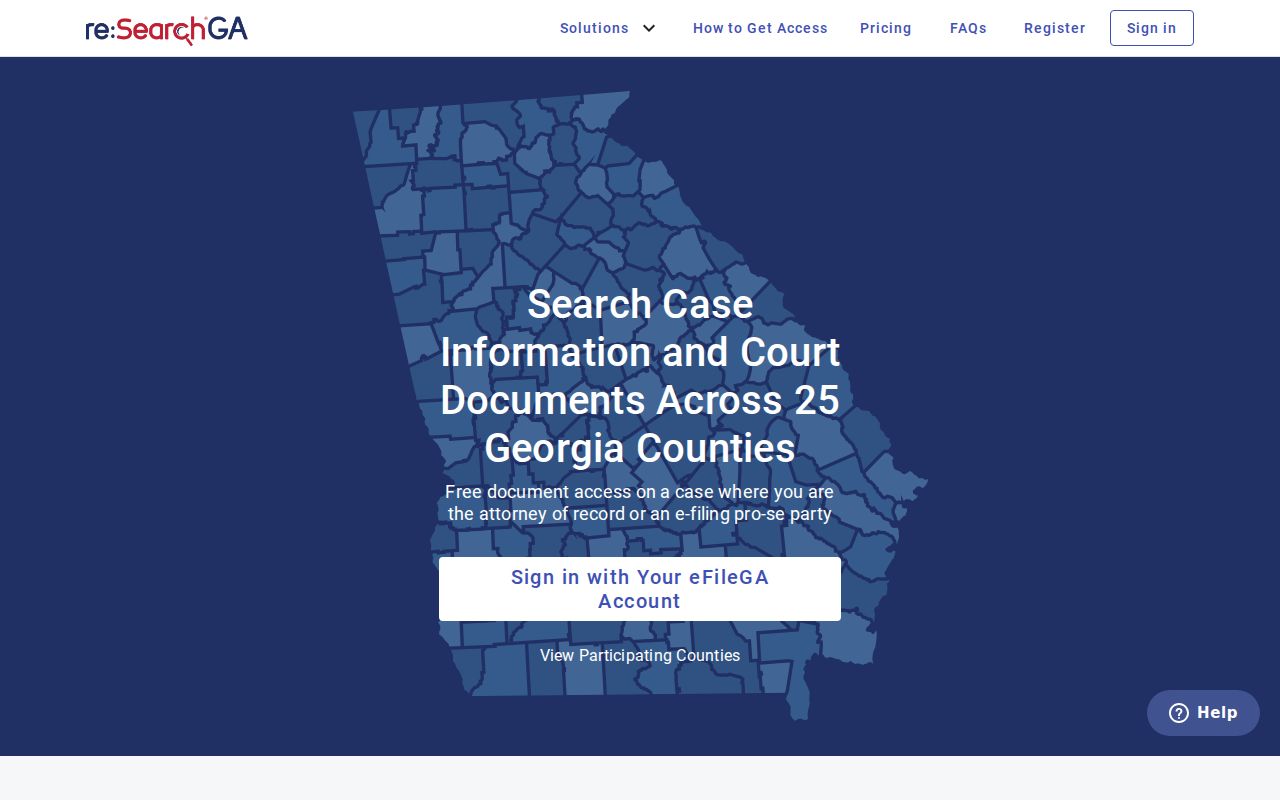
The portal image identifies the citizen-access route, while the court table above shows why the case type still controls which office can certify a copy.
State and Magistrate courts publish distinct copy schedules. Probate requests can name a decedent or ward and ask for a will, letters, an entire file, or another document. For Superior Court, mail and walk-in channels remain available. A certified copy carries the clerk's authentication; a screen result does not.
Locate Chatham County Vital Records
Recent Chatham County birth and death certificates run through local Vital Records or Georgia DPH. Birth certificates are restricted under O.C.G.A. § 31-10-26, and DPH limits certified birth and death requests to the registrant, immediate family, or a legal representative. Death copies without cause are generally public, while cause-of-death copies have tighter limits. Probate Court issues Chatham marriage licenses and copies. Divorce decrees stay with Superior Court; the state offers confirmation, not the decree.
Georgia does not use a simple rule that opens every vital certificate after a set number of years. Historical research follows a different path. Savannah birth holdings reach 1890 and death holdings reach 1803 in the Georgia Archives' guide, while Municipal Archives, church records, cemetery registers, and state microfilm can bridge gaps. Since July 2025, an adult Georgia-born adoptee has a defined DPH route to request an uncertified original pre-adoption birth certificate, with a route for certain relatives of a deceased adoptee.
Find Chatham Heirs and Burials
Probate estates, executor deeds, obituaries, and burial records form a strong lawful trail for relatives and heirs. Chatham Probate Court keeps estates, wills, letters, and guardianships in its Record Room. A request can identify the decedent, death date, and case number, then select a will, letters, full file, or another item. The court also offers a paid heir or beneficiary research request when identifying details are available.
Savannah operates Colonial Park, Laurel Grove North and South, Bonaventure, Greenwich, and Evergreen cemeteries. Search the municipal burial database, call the cemetery office, or use the kiosks at Bonaventure and Laurel Grove. The system contains interment and lot-owner entries, but six city sites are only part of nearly eighty cemeteries in Chatham County. A miss does not rule out a church, family, or private burial ground.
Municipal cemetery account books from 1910 through 1927 can name the buyer, deceased person, undertaker, lot, fee, and sometimes an address. That financial link may identify who arranged a burial when the ordinary interment entry is unclear.
Search Chatham Custody Records
The Chatham County Sheriff's inmate information page is the official local custody route. The research did not verify its complete field set, so avoid substituting a commercial booking site or assuming a no-match proves no custody. For state imprisonment, Georgia DOC's Find an Offender accepts a name, description, ID, or case number. DOC suggests trying the first four letters of a surname and including all offenders when a narrow query fails.
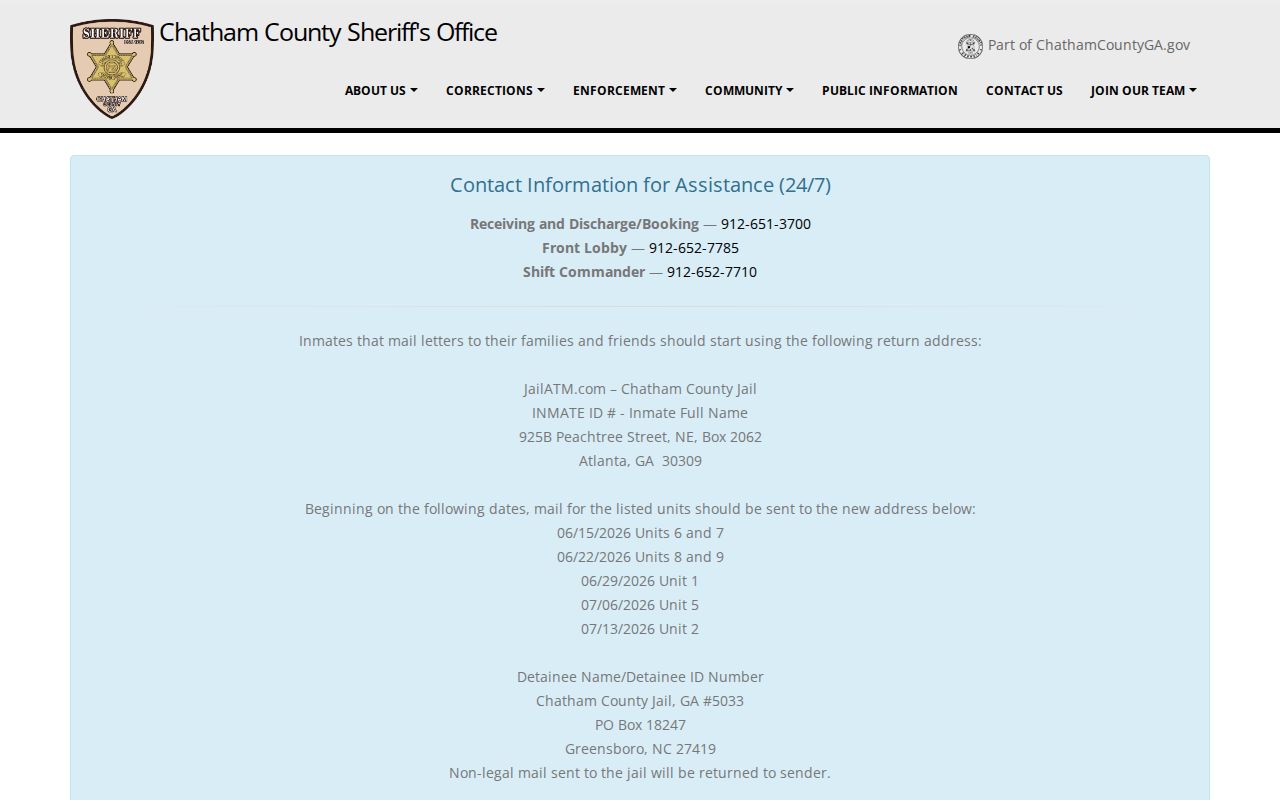
The sheriff's page provides the county route; incident reports and releasable jail records may require a request to the Sheriff's custodian.
Georgia DOC results may show a photo, name, physical description, county of conviction, crime, sentence, and release eligibility. Completed First Offender cases are not published. Medical, juvenile, victim, security, and family details are withheld. For federal custody, use the Bureau of Prisons locator instead.
Check Chatham Business Identities
A business name can reveal the people officially tied to an entity. The Georgia Corporations Division search supports business name, control number, registered-agent name, and officer-name routes. A result may show legal name, entity type, status, formation date, principal office, registered agent and office, and filing history. Those roles identify a formal business connection, not a current home address.
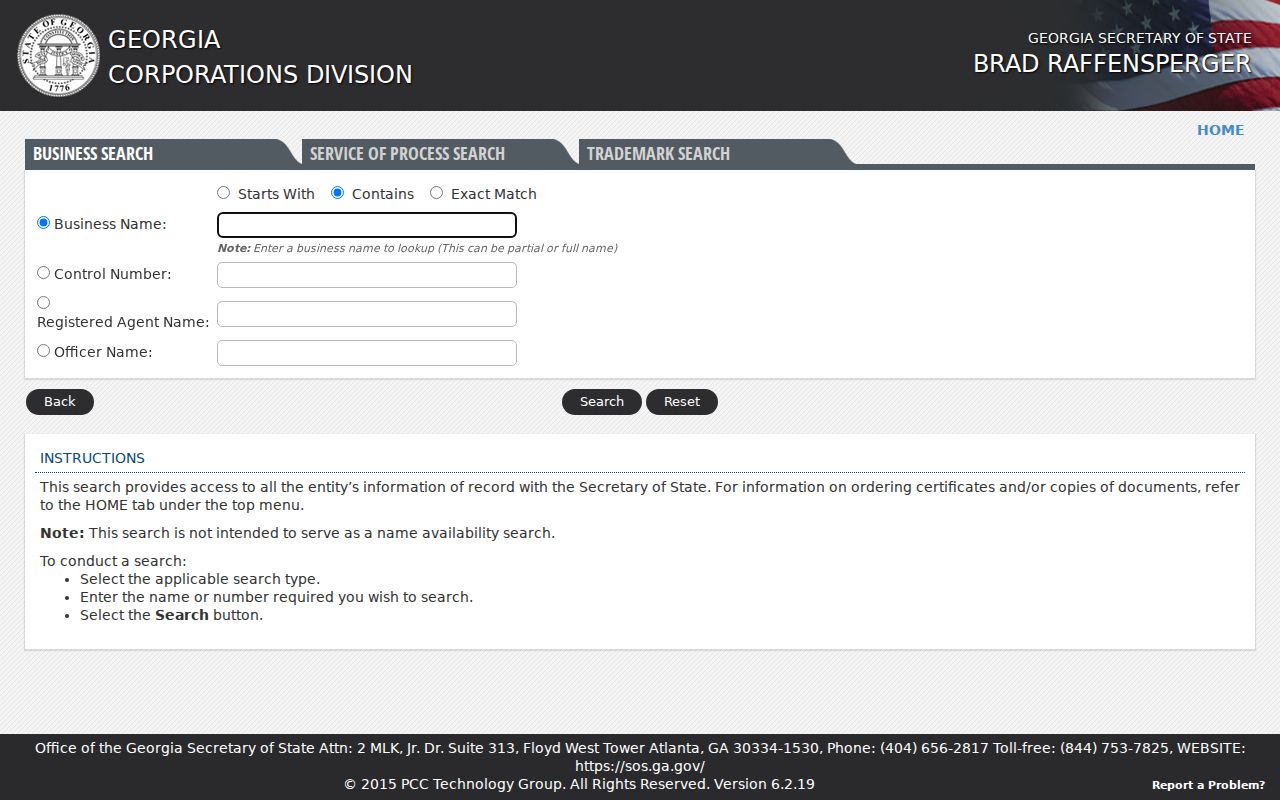
The state screen distinguishes entity and agent searches, which helps separate a Savannah trade name from a Georgia corporation.
Chatham trade names and partnerships are recorded with the Superior Court Clerk rather than treated as ordinary SOS entities. Professional credentials use the state's license verification system or a profession-specific board. Compare the name, license type, status, and board record instead of assuming an entity filing proves a credential.
Search Chatham Unclaimed Property Names
Georgia's official Unclaimed Property Program offers another name route for former Chatham County residents, relatives, and estate representatives. Unclaimed accounts can preserve a prior address or owner association after other current directories have changed. Search the official state route directly and follow its claim instructions. A matching name is a lead, not proof of identity or ownership.
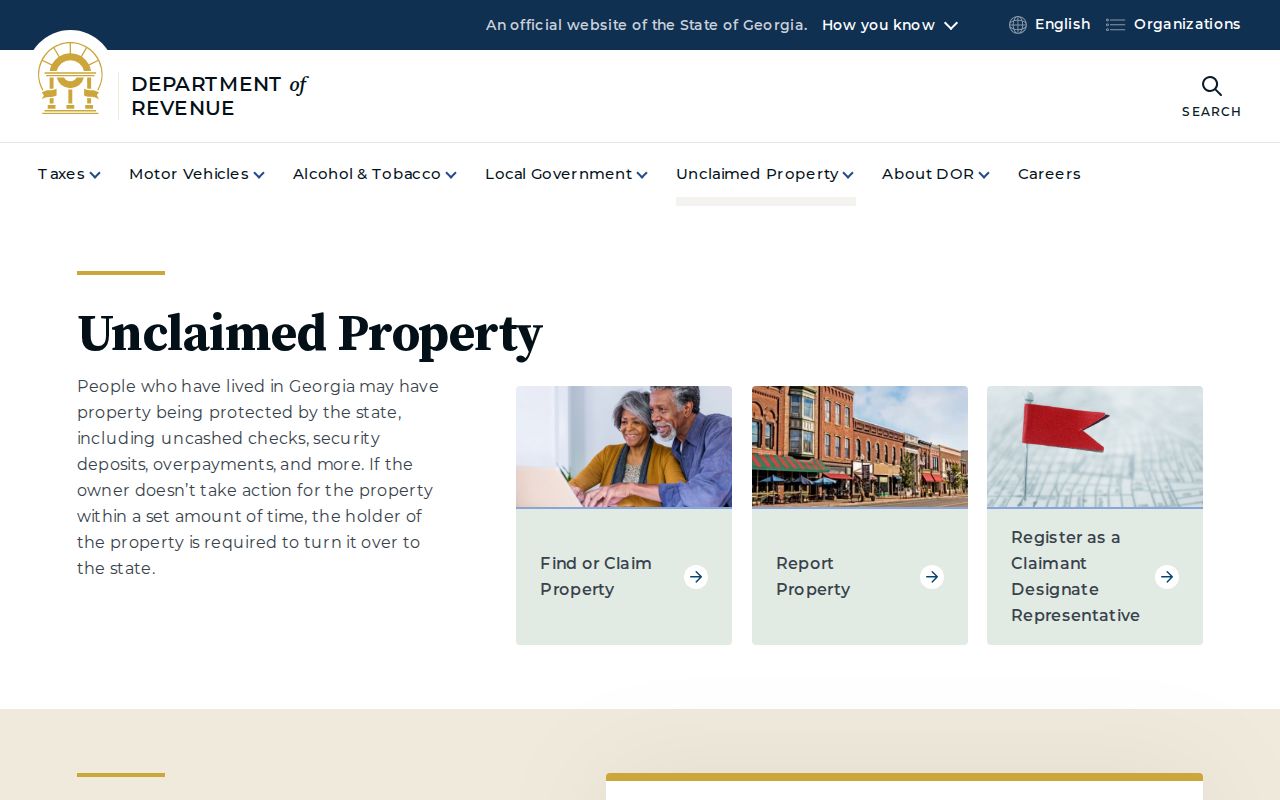
The state page keeps the lookup and claim process within an official domain, which helps avoid callers who demand an advance fee.
Verify any claimed match against a known address, family link, or estate document. Unsolicited messages may quote public names and addresses to appear official. Never treat that copied data as proof that a sender represents Georgia or Chatham County.
Decode Old Savannah Search Addresses
Savannah's 1911 address-system change can break a direct jump from an old directory to a modern parcel. Bull Street divides east from west, and Bay Street anchors much of the north-to-south numbering. Street renaming, annexation, highway work, square restoration, and postal correction add more traps. West Broad became Martin Luther King Jr. Boulevard, and the form of Montgomery Street changed over time.
Start with a dated directory page and its street guide. The Municipal Archives directory guide explains which volumes include a street index that reverses an address to an occupant. Confirm the historic number before testing a present parcel. Then use Sanborn maps, newspapers, city tax material, and deeds to tie the person to the place.
This matters because owner and occupant are different facts. A directory may list the resident, spouse, and occupation, while the assessor names the owner and the deed documents a transfer. Keeping those roles separate produces a more reliable Chatham County people search.
Reach Chatham Records Beyond Websites
Online coverage is not the same as office holdings. The Clerk describes Chatham records reaching into the early 1700s, yet neither GSCCCA nor re:SearchGA guarantees every index and image online from one date. Use Montgomery Street public computers, the Garden City Records Center, the Eisenhower satellite, mail, or eCertification when the portal stops. For Savannah government history, Municipal Archives offers appointment-based onsite research and remote reference help.
The archives' finding aids cover city workers, African American history, businesses, neighborhoods, newspapers, soldiers, cemeteries, and directories. Bull Street Library microfilm, the Georgia Historical Society research center in Savannah, and Georgia Archives expand the trail. Ask for a named series and date range rather than asking staff to find a person without a record target.
Georgia's Open Records Act is another fallback for an existing, non-exempt record. A useful request names the custodian, record type, person or address, date range, and fields or export already kept. Agencies generally respond within three business days by producing records when practical or stating the timetable and cost. They need not create a new report.